Micropia Amsterdam: The Complete Visitor Guide
Tickets, the body scan, live microbes and practical tips for the world's first microbe museum.
Address
Plantage Kerklaan 38-40, 1018 CZ Amsterdam
Opening hours
Daily, from morning to late afternoon (check current hours)
Ticket price
Typically mid to high teens
Best for
Families, science lovers, teenagers, teachers
Duration
1.5–2 hours
Important Before You Book
- Micropia is part of the ARTIS family. It was created by ARTIS and shares its history and mission.
- Micropia is located opposite ARTIS Royal Zoo. The entrance is directly across Plantage Kerklaan from the zoo.
- Micropia is a separate attraction. It has its own entrance, opening hours and tickets. A standard ARTIS Royal Zoo ticket does not automatically include Micropia, and a Micropia ticket does not include the zoo.
- Many visitors combine both. Combination tickets may be available. See our ARTIS Royal Zoo guide for the zoo.
- Always verify what your ticket includes. Read the description of every listing before you pay.
Book Micropia Tickets
Choose your date, then compare standard admission with combination options. Micropia is located directly opposite ARTIS Royal Zoo and can easily be combined with a zoo visit. Each listing shows what is included, so check it carefully before you book.
Why Book in Advance
Micropia is popular with families, and it gets busy during Dutch school holidays and on rainy weekends. Booking online lets you choose a time that suits your day and makes entry smoother. It also makes planning easier, particularly if you want to visit ARTIS Royal Zoo on the same day, since you can fit both around lunch and the opening hours of each.
What is Micropia, and is it worth visiting?
Micropia is the world's first museum of microbes, in Amsterdam, with live microscopic life, a body scan and hands-on exhibits. It belongs to the ARTIS family but is a separate attraction. It is well worth visiting for families and curious travellers.
Why Visit Micropia?
Micropia is a museum about something you cannot see. Microbes, the tiny living organisms that fill the world, are everywhere: on your skin, in your gut, in the air and in the soil. Here you can see them through microscopes, watch them in action and learn why they matter.
It is the world's first museum dedicated to microbes, so there is nothing quite like it. The exhibits are designed to be hands-on and visual, so you do not need to know anything about science to enjoy them. Screens, models and live samples make complicated ideas easy to grasp.
It is also fun. Children and adults can try the body scan, look through microscopes and take part in simple experiments. The tone is playful rather than scary, even when the subject is bacteria and viruses. And it is educational in a natural way, as visitors leave with a new view of health, food and the natural world.
For families, Micropia is an excellent indoor activity, and because it sits right opposite ARTIS Royal Zoo, it is easy to build into a day that mixes animals and science.
A Short History of Micropia
Creation by ARTIS
Micropia was created by ARTIS, the historic Amsterdam zoo founded in 1838. For more than a century and a half, ARTIS had shown visitors the animal and plant world. In the early 21st century, the organisation decided to extend that mission to the smallest forms of life, which make up most of the living world but are invisible without a microscope. The idea was to do for microbes what a zoo does for animals: bring them to life for the public.
Opening in 2014
Micropia opened its doors in 2014 in a building directly opposite the main ARTIS entrance. The decision to place it there was deliberate, so that visitors could combine the two. It quickly drew attention around the world, because a museum devoted entirely to microbes was a new idea.
Educational Mission
From the start, the aim was to change how people think about microbes. Many people associate them only with disease, but the vast majority are harmless or even essential. The museum teaches that microbes help us digest food, make bread, cheese and beer, clean wastewater and keep the planet in balance. By presenting science in an engaging way, it hopes to inspire curiosity and better understanding of health and nature.
Scientific Partnerships
Micropia works with scientists and research institutions to ensure that its content is accurate and up to date. The Micropia Lab, where researchers and educators work, links the museum to current scientific work. Such cooperation helps keep the exhibits fresh as discoveries are made.
Global Significance
Micropia is regarded as a pioneer in science communication. It has received international attention and awards, and has inspired other institutions to explore the microbial world in their own ways. For Amsterdam, it is another example of the city's tradition of combining science, education and culture.
Part of the ARTIS Family, Yet Separate
Micropia belongs to the ARTIS family, but it is a separate attraction with its own entrance, opening hours and ticketing. Visiting one does not automatically include the other, so check what your ticket covers.
Understanding the Microbial World
What Are Microbes?
Microbes, or microorganisms, are living things too small to see with the naked eye. They include bacteria, viruses, fungi, archaea and tiny single-celled organisms. They live almost everywhere on Earth, from the deep sea and hot springs to the inside of your own body. They were the first life on Earth and still make up a huge part of the living world.
Why Microbes Matter
Microbes are essential. They produce much of the oxygen we breathe, recycle nutrients in soil and water, and form the base of food chains. In our bodies, trillions of microbes help digest food, train the immune system and protect us from harmful germs. Without them, life as we know it could not exist.
Good and Harmful Microbes
Most microbes are harmless, and many are helpful. Some, however, cause disease, such as the bacteria behind certain infections or the viruses that cause flu. The museum shows both sides, explaining how the body defends itself and how medicines such as antibiotics and vaccines work. It also explains why it is important to use them wisely.
How Microbes Affect Daily Life
Microbes are at work in the bread you eat, the yoghurt in your fridge, the cheese on your plate and the beer you drink. They help clean water, make medicines and break down waste. They even shape the smell of your home and the health of your skin. Understanding them helps you make better choices about hygiene, food and health.
Why the Museum Is Unique
Most science museums cover broad topics. Micropia focuses on one subject and shows it live. You can see real microbes through microscopes, watch them move and grow, and compare them with images and models. It is a rare chance to see a hidden world up close, and the museum presents it in a clear, friendly way for beginners.
Top Highlights
The Body Scan
Stand in front of a screen and discover the microbes that live on and in your body. The scan shows how many and what kinds of microbes accompany every person, and it is often the part visitors remember best.
Lab Displays
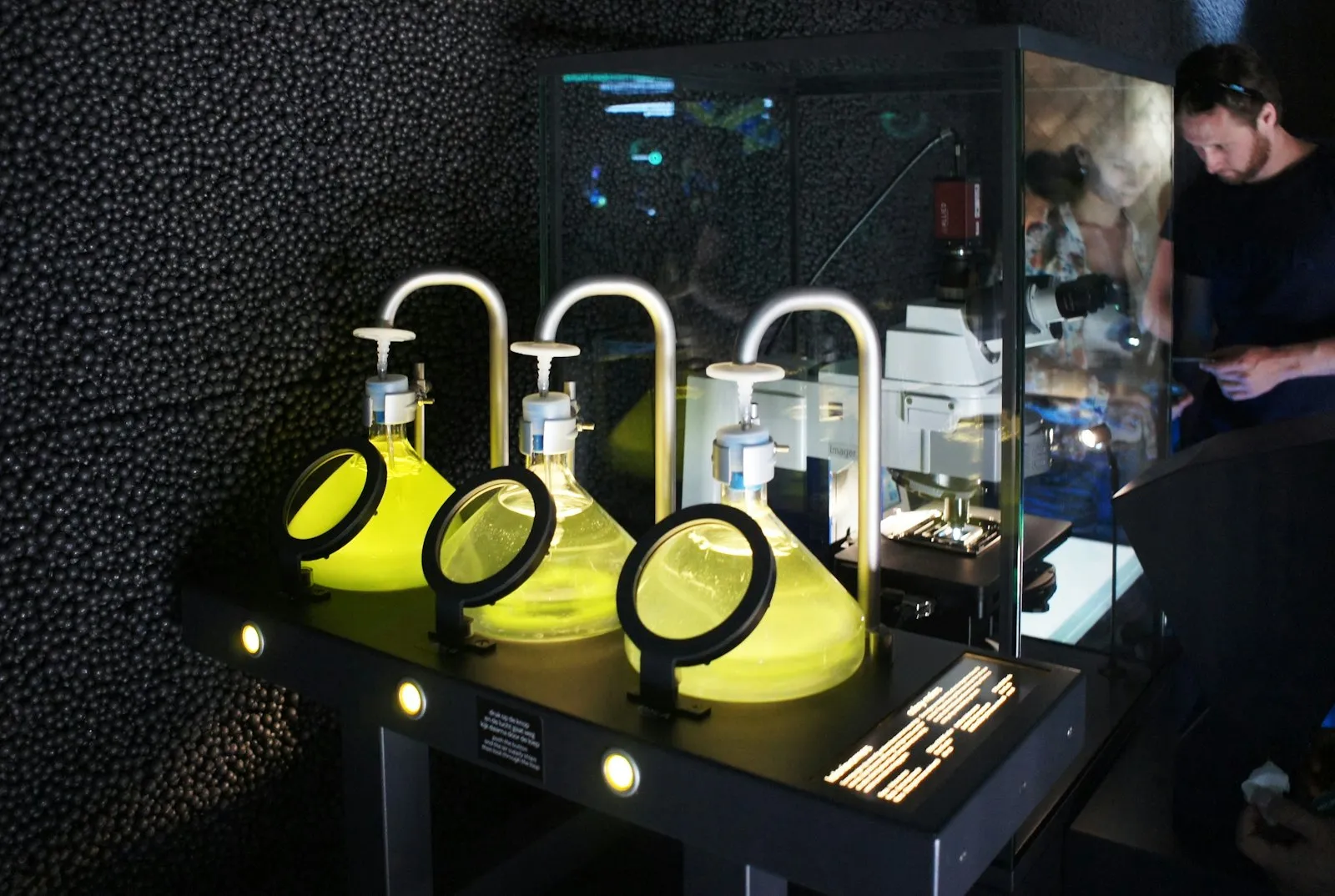
Displays show how scientists study microbes, from growing them in dishes to looking at them under a microscope. They give a good idea of how research works.
The Microbe Collection
The museum presents a large collection of living microbes, shown in glass containers and under microscopes. It includes familiar and unusual species, and the variety is surprising.
Interactive Exhibits
Touch screens, games and hands-on stations let you explore at your own pace. They are designed for all ages, making complicated topics easy and playful.
3D Visualisations
Enlarged 3D images and animations bring microscopic life to a visible scale. Seeing a bacterium or virus enlarged gives a new sense of its shape and structure.
Live Science Experiences
Live demonstrations and activities show microbes at work. Check the schedule when you arrive, as the museum may run talks and experiments.
The Micropia Lab
The lab is a working space where scientists and educators prepare samples and run experiments. Visitors can learn about the science behind the exhibits and sometimes watch researchers at work.
Specific exhibits may change over time, so check the current offer on the booking page.
What to Expect Inside
The Visitor Route
You enter on Plantage Kerklaan and move through the museum, usually starting with an introduction to microbes and then exploring different themes such as the body, food and the environment. The route is easy to follow.
Interactive Experiences
Expect microscopes, screens and hands-on stations. Take your time at each one, and let children lead.
The Family Experience
Children enjoy the body scan and the microscopes. The museum offers explanations at different levels, so parents and children can learn together.
Educational Exhibits
Informative displays explain how microbes affect health, food and the environment, in clear language and with strong visuals.
How Much Time You Need
Allow 1.5 to 2 hours. Families with young children may need less, and science fans may take longer.
Visitor Information
- Address: Plantage Kerklaan 38-40, 1018 CZ Amsterdam, opposite the ARTIS Royal Zoo entrance.
- Hours: Open daily, generally from the morning to late afternoon. Check the current schedule, since Micropia has its own hours.
- Ticket prices: Typically in the mid to high teens for adults, with reduced prices for children. Prices vary. Combination tickets with ARTIS may be available.
- Accessibility: Lifts and step-free routes are available. Contact the museum for specific needs.
- Photography: Generally allowed for personal use. Avoid flash near displays.
- Lockers: Lockers or a cloakroom for coats and bags.
- Museum shop: A shop with books, science toys and gifts.
Best Time to Visit
- Morning: Calmest, and the best time for the body scan and the microscopes.
- Afternoon: Busier, but it is a good choice after a morning at ARTIS.
- Weekdays: Quieter and easier to book.
- Weekends: Busy with families. Book a morning slot.
- School holidays: The busiest periods. Book ahead and expect crowds at popular stations.
- Rainy days: A popular wet-weather option, so arrive early or book ahead.
How to Get to Micropia
- From Amsterdam Centraal: Take tram 14 toward the Plantage area, about 10–15 minutes, or walk for around 20–25 minutes through the old centre.
- From Schiphol Airport: Take a train to Amsterdam Centraal, about 15–20 minutes, then continue by tram or taxi.
- By tram: Lines 7 and 14 stop at Plantage Kerklaan, right by the entrance. Check a live planner for current routes.
- By metro: The nearest stations, such as Waterlooplein, are about a 10–15 minute walk.
- On foot: About 10 minutes from the Jewish Cultural Quarter and 15 minutes from the NEMO Science Museum.
- By bike: Easy and popular with locals, with bike parking nearby.
Who Is Micropia For?
Families
A great indoor activity with something for different ages, easily paired with ARTIS Royal Zoo.
Children
Children enjoy the hands-on stations and the body scan. The content is best for ages around six and up.
Teenagers
Teenagers often find the topic fascinating, especially health, food and the body. It connects to school science.
Science Lovers
Live microbes and lab insights give enthusiasts plenty of depth.
Teachers
An excellent field trip that supports biology and health lessons. Contact the museum about group visits.
Weekend Visitors
A compact, memorable stop. Book a morning slot and add ARTIS if you have time.
Local Insider Tips
- Check exactly what your ticket includes, particularly if you buy a combination ticket with ARTIS.
- Book a morning slot to avoid the busiest periods.
- Do the body scan early, before lines build up.
- Let children operate the microscopes themselves.
- Read the short explanations, then ask questions. The content is built for curiosity.
- Visit ARTIS first if you want to see animals when they are most active, and Micropia after lunch.
- Use the lockers to travel light.
- Wear comfortable shoes, as you will be standing at exhibits.
- Check for live talks and demonstrations when you arrive.
- Bring hand sanitiser, because after a lesson about microbes, you will want it.
- Allow time for the shop, which has good science gifts.
- Use the tram or a short walk to the Plantage for lunch between visits.
Best Photo Spots
Interactive Exhibits
The body scan and the microscope stations make lively photos, especially with children reacting to what they see. Capture the moment of surprise.
Science Displays
The clean, bright displays look great in photographs. Look for enlarged 3D models and colourful visuals, and avoid flash against glass.
Family Photos
Take a family photo at the entrance and at a favourite exhibit. Ask a staff member to take a group shot.
Unique Museum Moments
Look for scenes that tell the story of the museum, such as a child at a microscope, a screen full of microbes or a researcher in the lab. Short videos work well too.
Choosing the Right Ticket
- Standard entry: Admission to Micropia only. The right choice if you plan just the museum.
- Micropia + ARTIS combination: A combination ticket may cover both Micropia and ARTIS Royal Zoo, usually at a better price than two separate tickets. Read the listing to confirm that both are included and whether entry times differ.
- Museumkaart: May include Micropia. Check the current rules and reserve a time slot.
- I amsterdam City Card: May include entry to Micropia. Verify the current inclusions before relying on it.
- Family tickets: Sometimes offered for parents with children, and worth comparing against individual prices.
Remember that Micropia and ARTIS are separate attractions. Always verify what your ticket includes.
Nearby Attractions
- ARTIS Royal Zoo: directly opposite Micropia. A separate attraction with its own ticket.
- NEMO Science Museum: more hands-on science, a short tram ride away.
- Jewish Cultural Quarter: museums and memorials about Jewish history in Amsterdam, close by.
- Hortus Botanicus: one of the oldest botanical gardens in the world, just around the corner.
- Anne Frank House: a poignant sight a short tram ride away. Book far in advance.
- Canal cruises: a relaxing way to see the city.
- Amsterdam Centre: the old city is within walking distance.
For more ideas, browse our Amsterdam museums guide, the Rijksmuseum, the Van Gogh Museum, the family attractions in Amsterdam and the Amsterdam travel guide.
Suggested Itineraries
Micropia + ARTIS Day
9:00 ARTIS Royal Zoo, 12:30 lunch in the Plantage, 14:00 Micropia, 16:00 tram to the centre. Remember to check which tickets cover each attraction.
Family Day
10:00 Micropia, 12:00 picnic or lunch, 13:30 ARTIS playground and animals, 16:00 canal cruise.
Science Day
10:00 Micropia, 12:30 lunch, 14:00 NEMO Science Museum, 16:30 rooftop views.
Weekend Visitor
Saturday: Micropia in the morning, canal cruise in the afternoon. Sunday: a museum and a market.
First-Time Visitor
Morning at Micropia, afternoon in the old centre, evening canal walk. See our 3-day Amsterdam plan for more.
Top 5 Reasons Visitors Love Micropia
- A unique concept. The world's first microbe museum, with nothing quite like it.
- Interactive science. Microscopes, a body scan and hands-on stations.
- Family friendly. Fun and engaging for children and adults alike.
- Educational. You leave with a new view of health, food and nature.
- Easy combination with ARTIS. Directly opposite the zoo, for a day of animals and science, with separate tickets or a combination ticket.
Micropia FAQ
Is Micropia worth visiting?
Yes. It is a unique, hands-on museum that makes an invisible world visible, and it suits families, curious adults and school groups. It is compact, so it is also easy to fit into a busy day.
Is Micropia included with ARTIS?
No. Micropia and ARTIS Royal Zoo are separate attractions, each with its own admission. A standard ARTIS ticket does not automatically include Micropia. Combination tickets may be available, so always check what your ticket includes before you buy.
Can I combine Micropia and ARTIS?
Yes. Micropia is part of the ARTIS family and sits directly opposite ARTIS Royal Zoo, so many visitors do both on the same day. Look for a combination ticket and read its description to confirm that both attractions are included.
Which should I visit first, Micropia or ARTIS?
Most families visit ARTIS first, while energy is high and animals are active, and finish with Micropia as a calmer indoor activity. If the weather is poor or children tire quickly, you could start with Micropia.
How far is Micropia from ARTIS?
Micropia is directly opposite the ARTIS Royal Zoo entrance, across Plantage Kerklaan, so it is about a one-minute walk.
How much are Micropia tickets?
Adult tickets are typically in the mid to high teens, with reduced prices for children. Prices vary by date and ticket type, so check the current price when you book.
How long does Micropia take?
Plan about 1.5 to 2 hours. Families with young children often take a little less, and science fans may stay longer.
Can children visit Micropia?
Yes. Micropia is popular with children, especially those who enjoy hands-on exhibits. Very young children may need help with the more detailed displays, and the content is best for ages around six and up.
Is photography allowed at Micropia?
Yes. Photography for personal use is generally welcome. Avoid flash near microscopes and displays, and follow any signs.
Is Micropia accessible?
The museum has lifts and step-free routes, and it is generally suitable for wheelchairs and pushchairs. Contact Micropia in advance if you need specific assistance.
Is Micropia good on rainy days?
Yes. It is entirely indoors, making it one of the best wet-weather activities in Amsterdam, especially for families.
What is Micropia?
Micropia is a museum about microbes, the tiny living organisms that surround us and live in us. It opened in 2014 and is widely described as the world's first museum of microbes.
Who runs Micropia?
Micropia was created by ARTIS and belongs to the ARTIS family. It operates as a separate attraction with its own entrance and tickets.
What is the body scan?
The body scan is an interactive experience in which you stand in front of a screen that shows the microbes that live on and in the human body. It is one of the museum's best-known highlights.
Can I see live microbes?
Yes. A highlight is viewing living microbes through microscopes, alongside displays and models that explain how they behave.
Is there a lab?
Yes. The Micropia Lab is a working laboratory space, where you can learn about the science behind the exhibits and sometimes see researchers at work.
Are there lockers and a shop?
Lockers or a cloakroom are normally available for coats and bags, and there is a museum shop with books and science gifts.
Can I use the Museumkaart or the I amsterdam City Card?
Check the current rules for each pass. Some passes include Micropia, but you may still need to reserve a time slot. Verify before you rely on a pass.
Can I buy tickets at the door?
Often, but popular days and school holidays can sell out. Booking online for a time slot is the safest option.
Is Micropia suitable for school groups?
Yes. It is popular with teachers because it links directly to biology, health and environment topics. Schools should contact the museum about group bookings and educational programmes.
Can I visit on a cruise day or short layover?
Yes. Micropia is close to the centre and takes about two hours. Book a timed ticket and keep a buffer for returning to the port or airport.
What else is nearby?
Nearby you can visit ARTIS Royal Zoo, the Hortus Botanicus, the Jewish Cultural Quarter, the NEMO Science Museum and the canals of the old centre.
Is Micropia open every day?
Normally yes, apart from a few holidays. Check the current opening hours before you travel.
Free Amsterdam Insider Guide
Get our free Amsterdam guide with family tips, hidden spots and seasonal events straight to your inbox.
Free Weekly Newsletter
Stay in the Loop on Amsterdam
Weekly events updates, travel tips, festival announcements, seasonal guides and day trip inspiration — delivered straight to your inbox.
- ✓ Weekly events updates
- ✓ Amsterdam travel tips
- ✓ Festival announcements
- ✓ Seasonal guides
- ✓ Day trip inspiration
🔒 Spam-beschermd. Uitschrijven altijd mogelijk.
Final Verdict
Micropia is a clever, engaging and genuinely unique museum. It turns an invisible subject into a vivid experience and works for families, school groups and curious adults. It belongs to the ARTIS family, sits opposite ARTIS Royal Zoo and pairs well with a zoo visit, but it is a separate attraction, so check what your ticket includes.
Who should visit: families, science lovers, teenagers, teachers and anyone curious about the hidden world around us.
Who may skip: visitors with very little time who would rather see art such as the Rijksmuseum, and travellers with very young children, who may prefer the zoo.
Overall rating: 8.6 / 10
Recommendation: a fun and memorable stop, best booked ahead and combined with ARTIS if you have the time.