The Ultimate Amsterdam Travel Guide
Everything you need to plan the perfect Amsterdam visit — neighborhoods, museums, transport, hotels, food, safety and the local knowledge that makes the difference.
Amsterdam Overview
Amsterdam is the capital and largest city of the Netherlands — a city of extraordinary contradictions. It is simultaneously one of Europe's oldest and most historically rich cities, and one of its most liberal, progressive and culturally dynamic. With a population of just under one million people, Amsterdam punches far above its weight in every category: art, music, architecture, food, and sheer quality of life.
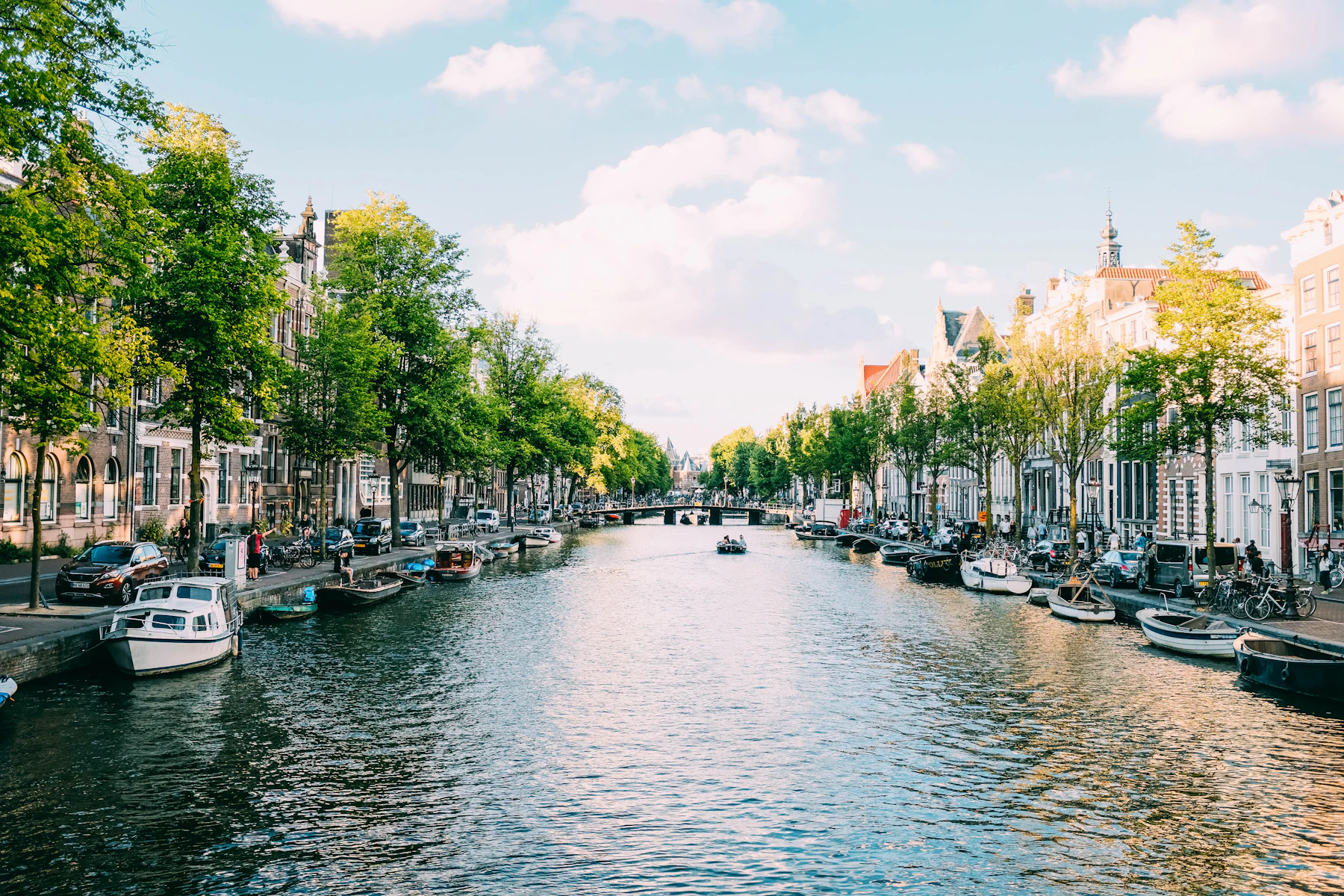
Built on a network of 165 canals crossed by more than 1,500 bridges, Amsterdam's 17th-century canal ring (the Grachtengordel) is a UNESCO World Heritage Site — one of the most recognisable and beautiful urban landscapes in the world. The iconic narrow canal houses, with their ornate gables and tilting facades, line the water in colours that shift from warm amber to deep ochre as the light changes through the day.
Amsterdam became one of the world's most powerful cities during the Dutch Golden Age (roughly 1580–1700), when it was the commercial capital of the world's most important trading empire. The wealth of that era built the canal ring, funded the paintings now housed in the Rijksmuseum, and created a culture of tolerance and intellectual freedom that still defines the city today.
Today, Amsterdam receives more than 20 million visitors per year — drawn by the world-class museums, the unique canal environment, the vibrant food and nightlife scene, and the proximity to some of the Netherlands' most iconic landscapes: windmills, tulip fields, medieval castles and fairy-tale villages all within an hour of the city centre.
This guide covers everything you need to make the most of your Amsterdam visit — whether you have 48 hours or two weeks.
Best Neighborhoods in Amsterdam
Amsterdam is a city of distinct neighborhoods, each with its own character. Knowing which area suits you is key to a great visit.
The Jordaan
Charming & BohemianAmsterdam's most beloved neighborhood — narrow lanes, independent art galleries, canal-side cafés, specialty coffee shops, and the best brown cafés (bruine kroegen) in the city. The Jordaan was historically a working-class district and still retains an authentic character that money can't manufacture. Wander without a plan.
Best for: Prinsengracht walk, Noordermarkt (Saturday), hidden hofjes (courtyards), Café 't Smalle
Grachtengordel (Canal Ring)
UNESCO HeritageThe 17th-century canal ring at the heart of Amsterdam — four concentric canals lined with the iconic narrow, tall Dutch canal houses that made Amsterdam famous worldwide. A UNESCO World Heritage Site and the most photogenic area of the city. The three main canals — Herengracht, Keizersgracht and Prinsengracht — each have a distinct character.
Best for: Evening canal walks, canal house architecture, bridge views, houseboat spotting
De Pijp
Multicultural & VibrantAmsterdam's most culturally diverse and energetic neighborhood — home to the Albert Cuyp Market (the Netherlands' largest daily street market), dozens of international restaurants, craft beer bars and a young creative population. De Pijp is where Amsterdam locals actually go to eat, drink and live.
Best for: Albert Cuyp Market, Indonesian restaurants, craft beer bars, Heineken Experience
Oud-Zuid
Elegant & CulturalAmsterdam's most prestigious residential district — home to Museumplein (Rijksmuseum, Van Gogh Museum, Stedelijk), Vondelpark, and the luxury shopping street P.C. Hooftstraat. Quieter and more elegant than the tourist-heavy city centre, Oud-Zuid is where cultural Amsterdam is concentrated.
Best for: Museumplein (all three major museums), Vondelpark, upscale dining, Concertgebouw
Amsterdam Noord
Post-Industrial CreativeA former shipyard district across the IJ river, accessible by free ferry from Central Station. Noord has transformed into Amsterdam's most creative neighborhood — the NDSM Wharf is a vast cultural complex of artist studios, food trucks and unconventional bars. Eye Film Museum sits here with stunning IJ waterfront views.
Best for: NDSM Wharf, Eye Film Museum, A'DAM Lookout, free IJ ferry, street art
Centrum
Historic & TouristThe medieval heart of Amsterdam — Dam Square, the Royal Palace, the Nieuwmarkt, the Red Light District and hundreds of years of history in a compact area. Busy with tourists but genuinely historic. Early mornings (before 9am) reveal a quiet, beautiful city before the crowds arrive.
Best for: Dam Square, Begijnhof, Nieuwmarkt, Waterlooplein flea market, historic churches
Top Attractions in Amsterdam
Amsterdam's most important sights — with honest time estimates and essential visitor advice.
Rijksmuseum
The Netherlands' greatest museum — Dutch Golden Age masterpieces including Rembrandt's Night Watch and Vermeer's Milkmaid. Book well in advance.
⏱ 2–3 hours
MuseumVan Gogh Museum
200 paintings and 500 drawings by Vincent van Gogh — the world's most comprehensive collection. Amsterdam's most visited museum — book months ahead.
⏱ 1.5–2.5 hours
Historic SiteAnne Frank House
The secret annex where Anne Frank hid and wrote her famous diary. One of the most moving experiences in Europe. Pre-booking mandatory — no walk-in tickets.
⏱ 1–1.5 hours
UNESCO SiteAmsterdam Canal Ring
The 17th-century canal ring — best explored on foot or by boat. A canal cruise gives you the most iconic Amsterdam perspective.
⏱ 2–3 hours walk / 75 min cruise
ParkVondelpark
Amsterdam's most beloved green space — free outdoor concerts in summer, beautiful year-round. A perfect morning start.
⏱ 1–2 hours
MarketAlbert Cuyp Market
The Netherlands' largest daily street market in De Pijp — Dutch cheese, fresh herring, stroopwafels and global street food.
⏱ 1–2 hours
MuseumStedelijk Museum
World-class modern art — Mondrian, Malevich, Warhol. On Museumplein alongside Rijksmuseum and Van Gogh.
⏱ 1.5–2.5 hours
FamilyNEMO Science Museum
Five floors of hands-on science — Amsterdam's best family museum. Free rooftop terrace with panoramic views.
⏱ 3–4 hours (families)
Museums Guide
Amsterdam has more museums per capita than almost any city on earth. For a capital of its size, the quality and diversity of its museum collections is extraordinary — from Dutch Golden Age masterpieces to world-class contemporary art, from the most famous diary ever written to five floors of interactive science.
The Big Three
The Rijksmuseum, Van Gogh Museum and Anne Frank House are Amsterdam's essential museum experiences — all three should be booked well in advance. The Rijksmuseum and Van Gogh Museum are both on Museumplein and can be combined in a single day. The Anne Frank House is in the Jordaan, best visited in the evening (book an evening slot for a quieter experience).
Contemporary Art
For contemporary art, the Moco Museum houses major Banksy and KAWS works, while the Stedelijk Museum has Europe's finest modern art collection including a comprehensive Mondrian collection.
For Families
The NEMO Science Museum is Amsterdam's best family museum — five floors of hands-on science experiments. The rooftop terrace is free and offers one of Amsterdam's best panoramic views.
The Museum Card
If visiting three or more museums, the Museumkaart (€69.90) offers free entry to 400+ Dutch museums and is excellent value. Valid for 31 days.
Getting Around Amsterdam
From Schiphol Airport
Amsterdam Airport Schiphol (AMS) is 18 km southwest of the city. The fastest and cheapest option is the Intercity train (17 minutes, €5.70, every 15 minutes to Amsterdam Centraal). Taxis cost €40–60 and take 25–45 minutes depending on traffic. Pre-booked private transfers cost €45–75 and are ideal for families or late arrivals.
Trams — The Best Way Around the City
Amsterdam's tram network is excellent — 15 lines covering the entire city centre. Lines 2, 12 and 14 serve most tourist areas. A GVB day ticket (€9) covers unlimited tram, bus and metro travel. Contactless bank cards are accepted on most trams.
Walking
The historic city centre is compact and best explored on foot. Most major sights are within 30 minutes' walk of each other. Walking Amsterdam's canal streets is one of the great pleasures of any visit.
Cycling
Amsterdam has more bicycles than people. Bike hire costs €12–18 per day. Be aware: cycle lanes (red-paved paths) are fast and busy. Cyclists have priority — look both ways before crossing a bike lane.
Free Ferry
Free IJ ferries run 24/7 between Amsterdam Centraal and Amsterdam Noord — one of the great free experiences of the city, with stunning IJ waterfront views.
Where to Stay in Amsterdam
Amsterdam offers accommodation across every price range — from grand five-star canal house hotels to well-located budget hostels. Location matters enormously in Amsterdam: staying in or near the historic canal ring puts you within walking distance of most major sights.
Best Areas to Stay
- Jordaan / Canal Ring: Most atmospheric. Within walking distance of everything. Best for first-time visitors.
- Oud-Zuid (near Museumplein): Quieter, elegant, steps from the Rijksmuseum and Van Gogh Museum.
- Near Central Station: Maximum transport convenience. Can be noisy. Good for early flights or late arrivals.
- De Pijp: Vibrant, local feel. Slightly further from main sights but excellent restaurants and nightlife.
What to Budget
- Budget: €40–80/night (hostel dorm or basic hotel)
- Mid-range: €100–180/night (3-star hotel, good location)
- Luxury: €200–500+/night (4–5 star, canal house hotels)
Book early — Amsterdam hotels fill up fast, especially in April (tulip season, King's Day), June–August (summer), and during events like ADE (October).
Food & Drink in Amsterdam
Amsterdam's food scene is far richer and more diverse than most visitors expect. Beyond the tourist traps near Dam Square, there is a thriving restaurant culture, excellent street food and one of Europe's most interesting craft beer scenes.
Essential Dutch Food Experiences
- Raw herring (haring): A Dutch institution — mild, fresh and delicious with chopped onions and pickles. Buy from a harbour or market stall.
- Stroopwafels: Two thin waffles sandwiched with caramel syrup — buy fresh from a market stall and place on your coffee to warm them.
- Bitterballen: Deep-fried crispy balls with a beef ragout centre — the quintessential Dutch bar snack, always served with mustard.
- Dutch pancakes (pannenkoeken): Thinner than American, thicker than crêpes — served sweet or savoury. A proper Dutch meal.
- Indonesian rijsttafel: A feast of 15–20 small dishes — the most celebrated restaurant experience in Amsterdam, a legacy of Dutch colonial history.
Best Food Markets
The Albert Cuyp Market (De Pijp, Tuesday–Saturday) is the Netherlands' largest street market — perfect for a food crawl. The Noordermarkt (Jordaan, Saturday) is Amsterdam's finest organic farmers' market.
Is Amsterdam Safe?
✓ Amsterdam is one of Europe's safest major cities
Violent crime against tourists is very rare. Amsterdam consistently ranks among the safest European capitals.
Key Safety Tips
- Cyclists: The most important safety tip. Amsterdam's bike lanes are fast and busy. Always look both ways before crossing a red-paved cycle lane. Cyclists have priority and move silently — many pedestrian accidents involve bikes.
- Pickpocketing: Common in tourist areas (Central Station, Museumplein, busy trams). Keep bags closed and valuables secure — don't leave phones on café tables.
- Canal edges: Amsterdam's canals are not fenced. Take care near canal edges, especially after dark or after drinking.
- Drugs: Cannabis is tolerated in licensed coffee shops only. All other drugs are illegal. Never buy from street dealers.
- Red Light District: Generally safe but can be disorientating at night. Stay on main streets and be aware of your surroundings.
Local Tips for Amsterdam
💡 Visit museums at opening time (9am)
The first hour is dramatically quieter at every major Amsterdam museum. This is especially true at the Rijksmuseum and Van Gogh Museum — the Night Watch and Sunflowers with almost nobody around is worth an early alarm.
💡 Avoid tourist restaurants near Dam Square
The restaurants immediately around Dam Square, Leidseplein and near Central Station are significantly more expensive and lower quality than places two streets away. Walk into residential streets for authentic local food at normal prices.
💡 Book everything before you arrive
Anne Frank House has NO walk-in tickets. Van Gogh Museum sells out. Rijksmuseum sells out in summer. Hotels fill in April and summer. Book everything before you depart home — not on the morning of your visit.
💡 The Jordaan is better in the morning
The Jordaan neighborhood is at its most magical before 10am — quiet streets, light reflecting on the canals, shopkeepers opening up. By midday it's busier. Take your morning walk there.
💡 Use the free IJ ferry
The free ferry from behind Central Station to Amsterdam Noord is one of the city's great experiences — five minutes across the water to a completely different Amsterdam. The NDSM Wharf is unmissable for creative energy.
💡 Sit in a brown café
Amsterdam's traditional brown cafés (bruine kroegen) are unlike anything outside the Netherlands — candlelit, ancient, wood-panelled, warm. Order a Dutch beer (Heineken, Amstel, or a local craft), sit back, and feel the city. This is what Amsterdam actually is.
💡 Day trips are essential
Some of the most iconic Dutch experiences — windmills, tulip fields, medieval castles, fishing villages — are just 20–45 minutes from Amsterdam. Missing a day trip is missing the Netherlands. See the full guide to the best day trips.
💡 Learn two Dutch phrases
Dank je wel (thank you) and alstublieft (please / here you go) will earn you enormous goodwill from locals. The Dutch speak outstanding English but genuinely appreciate any attempt at their language.
Frequently Asked Questions
How many days do I need in Amsterdam?
3–4 days is ideal for a first visit — enough to see the main museums, explore the canals and neighborhoods, and do a day trip to the countryside. A long weekend (3 nights) covers the essentials without rushing.
What is the best time to visit Amsterdam?
Spring (April–May) is peak season for good reason — tulips in bloom, King's Day (April 27), and Keukenhof gardens. Summer (June–August) has the best weather but the biggest crowds. Autumn (September–November) is excellent for culture and has fewer tourists. Winter has the magical Amsterdam Light Festival (November–January).
Is Amsterdam expensive?
Amsterdam is a mid-to-high cost European capital. Budget €150–250 per person per day for a comfortable mid-range experience (hotel, meals, museums, transport). Budget travelers can manage on €80–120 with hostels and supermarket meals.
Is Amsterdam safe?
Amsterdam is one of Europe's safest cities. The main risks are pickpocketing in tourist areas and accidents with cyclists. Watch for bike lanes (red-paved paths) at all times — cyclists move fast and have priority. The Red Light District is generally safe but can be disorienting late at night.
Do I need to book museums in advance?
Yes — absolutely essential. The Anne Frank House has NO walk-in tickets and sells out months ahead. The Van Gogh Museum and Rijksmuseum also sell out on busy days, especially in summer and April. Always pre-book before you arrive.
What is the best way to get around Amsterdam?
Walking is best for the city centre — most sights are within 30 minutes on foot. Trams cover longer distances efficiently. The free IJ ferry to Amsterdam Noord is great for the creative district. Cycling is wonderful if you're comfortable with busy bike lanes. Avoid Uber/taxi for short city trips.
What Dutch food should I try?
Raw herring (haring) with onions and pickles, Dutch pancakes (pannenkoeken), stroopwafels, bitterballen (deep-fried beef ragout balls), aged Gouda cheese, and Dutch fries (patat) with mayonnaise. For a full meal, Indonesian rijsttafel is Amsterdam's most celebrated restaurant experience.
Can I cycle in Amsterdam as a tourist?
Yes, but be aware of the rules and the fast pace. Cycle lanes are red-paved and busy. Always cycle on the correct side, signal before turning, and be extremely careful of tram tracks (they can catch your wheel). Bike hire costs €12–18 per day from many operators near Central Station.
Essential Amsterdam Links
⭐ Recommended Private Experience
Mike Green Tours offers private day trips from Amsterdam to windmills, castles and tulip gardens in a luxury Tesla. Certified local guide, max 4 guests.
View Private Tours →