Body Worlds Amsterdam: The Complete Visitor Guide
Tickets, what to expect, plastination explained and practical tips for Amsterdam's educational exhibition about the human body.
Address
Damrak 66, 1012 LM Amsterdam
Opening hours
Daily, from morning to early evening (check current hours)
Ticket price
Typically mid-€20s
Best for
Adults, teenagers, science lovers
Duration
1–1.5 hours
Book Body Worlds Amsterdam Tickets
Choose your date and entry time, then compare standard admission with related options. Each listing shows what is included, so you can pick what suits your visit.
Important Before You Visit
- Body Worlds is educational. It is designed to teach visitors about anatomy, health and how the body works.
- The focus is on anatomy and health. Exhibits explain muscles, bones, organs and the brain, and show how lifestyle affects them.
- It is suitable for most visitors. Adults, teenagers and many families with older children visit. Parents should use their judgement for younger children.
- Real preserved human bodies are displayed. They are preserved using a technique called plastination, and they come from people who donated their bodies for science and education. Some visitors may find this confronting.
- It is not a horror attraction. The tone is respectful and informative, and the aim is to inspire curiosity and healthier living.
Why Book in Advance
Body Worlds is in the busiest part of central Amsterdam, and it gets crowded on rainy days, weekends and during holidays. Booking online lets you choose a time that suits your day and usually means smoother entry than queuing at the door. It also helps you plan the rest of your day, because you can combine the visit with Dam Square, lunch and other stops nearby.
What is Body Worlds Amsterdam, and is it worth visiting?
Body Worlds Amsterdam is an educational exhibition on Damrak that shows real plastinated human bodies and explains anatomy, health and well-being. It is worth visiting for curious adults and older children who want a respectful, informative look at the human body.
Why Visit Body Worlds?
Most of us never see the inside of a human body. Body Worlds changes that. Using real, carefully preserved bodies, it shows how muscles, bones, organs and the brain are arranged and how they work together. Seeing the real thing is a very different experience from looking at a diagram, and many visitors leave with a new respect for their own bodies.
The exhibition is educational at its core. Panels explain each system in plain language, and interactive stations let you test your own knowledge. It is as much about health and lifestyle as about anatomy, with insights into how movement, food, sleep and stress affect the body.
It is also a unique experience. There is nothing quite like it in Amsterdam, and it gives travellers a thought-provoking alternative to art museums and canal walks. The location, on Damrak just a few minutes from Centraal Station, makes it easy to include in a day of sightseeing. And because it is fully indoors, it is a dependable choice in any weather.
A Short History of Body Worlds
Gunther von Hagens
Body Worlds was created by Gunther von Hagens, a German anatomist born in 1945. Working at the University of Heidelberg in the 1970s, he looked for a better way to preserve anatomical specimens for teaching. Traditional methods used formaldehyde, which left specimens messy, smelly and fragile. Von Hagens wanted something cleaner, more durable and more lifelike.
The Plastination Technique
In 1977 he invented plastination. In this process, the water and fat in body tissue are replaced with plastics such as silicone, and the specimen is then hardened. The result is a dry, odourless and long-lasting specimen that keeps the fine details of muscle, nerves and organs. This made it possible to show the body in new ways, and plastination is now used by medical schools and museums around the world.
Global Exhibitions
The first public Body Worlds exhibition opened in Japan in 1995. It then toured the world, reaching millions of visitors in cities across Europe, Asia and the Americas. Alongside the success came public debate. Some people questioned the ethics of displaying real bodies, and the exhibition responded by explaining that all bodies come from donors who consented during their lives, and by presenting the displays in a respectful, educational setting.
The exhibitions often follow themes, such as the heart, the brain, movement or well-being. Each is designed to teach, and to encourage visitors to think about their own health.
The Amsterdam Location
Body Worlds Amsterdam opened as a permanent exhibition on Damrak, in the heart of the city, in 2016. Rather than touring, it has a home in a historic canalside building, and it is known for its theme, The Happiness Project. The project explores how the body and mind relate to emotions, relationships and well-being, linking anatomy to the question of what makes people feel happier and healthier.
The exhibition is aimed at both locals and visitors, and the interactive elements make it appealing to a wide audience. It has become one of the best-known attractions of its kind in Europe.
How the Human Body Works
Muscles
You have more than 600 muscles. They work in pairs, one pulling while the other relaxes, to move your bones. Some, such as the muscles in your arms and legs, you control consciously. Others, such as the heart and the muscles around your digestive system, work automatically. At Body Worlds you can see the layers of muscle in detail, and it becomes clear how athletes, dancers and ordinary people use them.
Bones
An adult skeleton has 206 bones. They support the body, protect organs and store minerals. Bones are alive, constantly renewing themselves, and they respond to exercise by becoming stronger. Seeing a full skeleton shows how joints, spine and ribs fit together.
Organs
The major organs, such as the heart, lungs, liver, kidneys and intestines, each do a vital job. The heart pumps blood around the body, the lungs bring in oxygen, and the liver and kidneys filter waste. The exhibition shows these organs in their real positions, and sometimes compares healthy and unhealthy examples to illustrate the effects of habits such as smoking.
The Brain
The brain controls thoughts, movements, emotions and memories. It contains billions of nerve cells that communicate through tiny electrical signals. Displays show its structure and explain how different regions handle language, vision, emotion and more. This section links directly to the Happiness Project, which looks at how the brain responds to stress, joy and connection.
Health and Lifestyle
The exhibition does not just show anatomy. It shows what happens when we look after our bodies and when we do not. Exercise, balanced food, sleep and social connection support health, while smoking, excessive alcohol and chronic stress can cause harm. Visitors often say this is the most memorable part, since it turns abstract advice into something visible.
Top Highlights
Plastinated Human Bodies
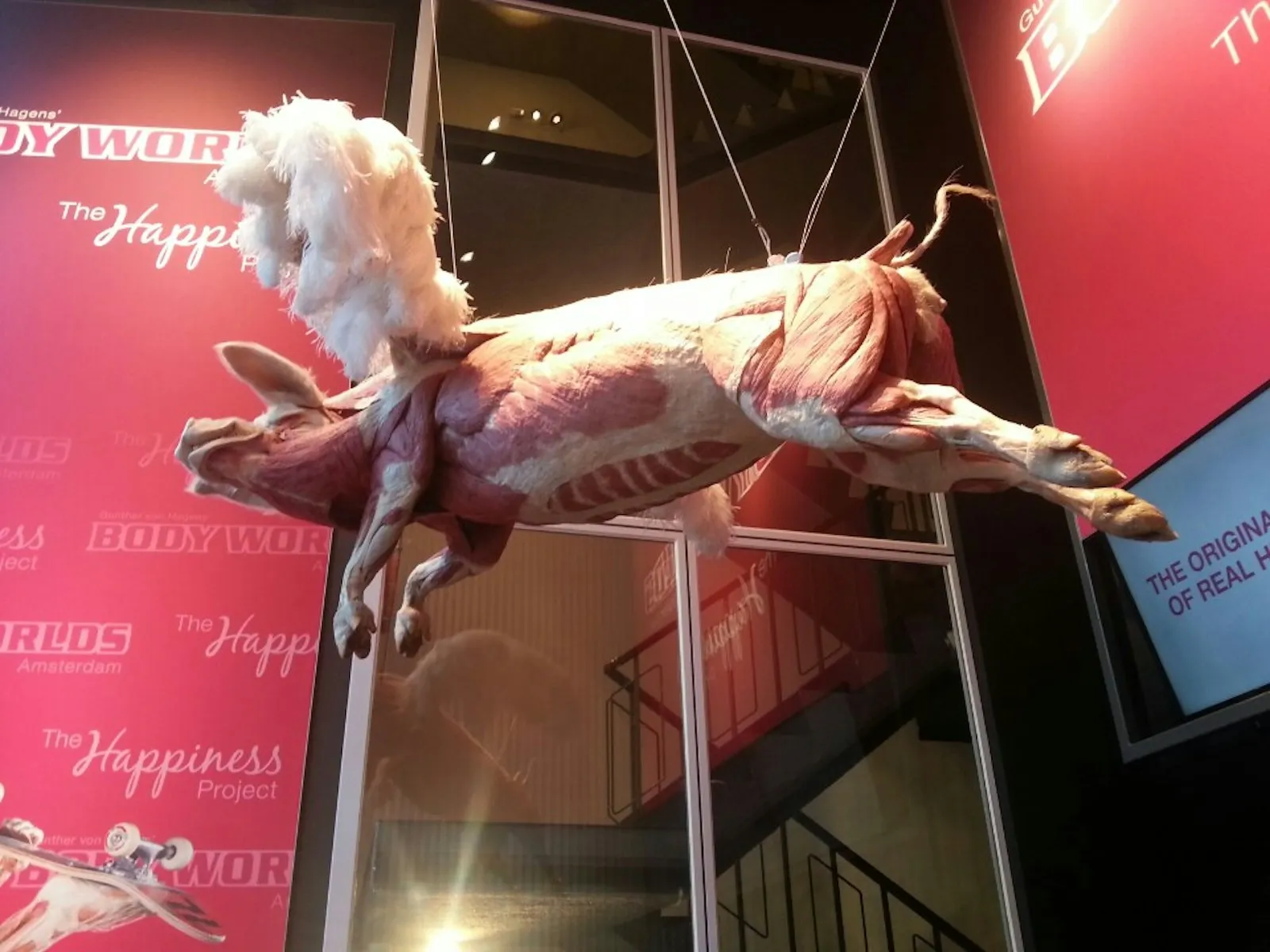
The heart of the exhibition: whole-body and partial specimens that show the structure of the body. They are arranged in poses that illustrate movement and function, and each is accompanied by explanations.
The Happiness Project
The exhibition's theme explores the connection between the body, the mind and happiness. It includes insights into how emotions affect health, and what we can do to feel better.
Human Brain Displays
Displays of the brain show its structure and explain how it works. They are a favourite with visitors who are curious about thinking and feeling.
Sports and Movement Displays
Specimens posed in athletic positions show the muscles and joints at work, from running to throwing. They help you understand how the body generates movement.
Heart and Circulation
The circulation system, with its network of vessels, is shown in striking detail. The heart is explained as the engine of the body, and displays show the effects of lifestyle on the cardiovascular system.
Interactive Exhibits
Hands-on stations let you test reflexes, explore the senses and learn through play. They add variety to the visit and are good for older children and teenagers.
The displays can change over time, so check the venue's current information.
What to Expect Inside
The Visitor Route
You enter from Damrak, scan your ticket and follow a route through the exhibition. The route is easy to follow, and the signs and panels guide you from one theme to the next.
Exhibition Floors
The exhibition spreads over several floors of a historic building. Each floor focuses on different topics, from anatomy and movement to emotion and well-being.
Interactive Elements
Interactive stations are scattered along the route. Take your time at each, and let older children lead.
Educational Displays
Clear panels explain what you are seeing in everyday language. Most information is available in English as well as Dutch.
How Much Time You Need
Allow 1 to 1.5 hours. Visitors who read every panel may stay longer.
Visitor Information
- Address: Damrak 66, 1012 LM Amsterdam.
- Hours: Open daily, generally from the morning to the early evening. Check the current schedule.
- Ticket prices: Typically in the mid-€20s for adults, with reduced prices for young visitors. Prices may change.
- Accessibility: Lifts and step-free routes are available. Contact the venue for specific needs.
- Photography: Restricted in the areas with real bodies. See the photo rules below.
- Lockers: Lockers or a cloakroom for coats and bags, normally available.
- Gift shop: A shop with books and gifts related to the human body.
Best Time to Visit
- Morning: Calmest, with more space to read and reflect.
- Afternoon: Busier, particularly on weekends and rainy days.
- Weekdays: Quieter and easier to book at short notice.
- Weekends: Busy. Book a morning slot.
- Rainy days: A popular indoor option, so arrive early or book ahead.
- Summer: Central Amsterdam is crowded, but the exhibition is cool inside.
- Winter: Quieter and a good choice for cold, dark afternoons.
How to Get to Body Worlds Amsterdam
- From Amsterdam Centraal: Walk down Damrak for about five minutes. The exhibition is on the left side, close to the station.
- From Schiphol Airport: Take a train to Amsterdam Centraal, about 15–20 minutes, then walk.
- By tram: Several lines stop at Dam or near Centraal Station, including lines 4, 14 and 24. Check a live planner for current routes.
- By metro: Centraal Station and Rokin station are both within a short walk.
- On foot: About five minutes from Centraal and five minutes from Dam Square.
Who Is Body Worlds For?
Science Lovers
A rare chance to see real anatomy and learn how the body works.
Teenagers
An engaging and memorable complement to biology lessons, with interactive elements.
Adults
A thoughtful and informative experience that encourages healthier choices.
Families With Older Children
Suitable for many families with older children and teenagers. Judge based on your child's maturity.
Teachers
A valuable resource for biology and health education. Contact the venue about group visits.
Weekend Visitors
A different and memorable stop in the city centre. Book a morning slot.
Local Insider Tips
- Read the information on the booking page about age guidance and content before you go.
- Book a morning slot to avoid the busiest periods.
- Take your time at each display and read the panels.
- If you are visiting with a teenager, talk about what you will see beforehand.
- Use the lockers to travel light.
- Do not take photos of the bodies unless the signs say it is allowed.
- Wear comfortable shoes, as you will be standing and walking.
- Allow time to sit and reflect in the quieter areas.
- Pair the visit with lunch near Dam Square or a canal cruise.
- Be respectful and keep your voice low, as the atmosphere is calm.
- If a child or adult feels uncomfortable, you can skip a section or take a break.
- Check whether your city card includes entry before you buy a ticket.
Photography Rules and Best Photo Spots
Photography rules in an exhibition with real bodies are strict, out of respect for the donors and for other visitors. In general, you should not photograph or film the plastinated bodies. Some areas, such as the entrance, parts of the interactive zones and designated spots, may allow photos. Always follow the signs and staff guidance.
Building Exterior
The exterior on Damrak is a good place for a souvenir photo. The street is lively, with canal houses and trams, and the light is best in the morning.
Entrance Area
The entrance area and signage often allow photographs. Take a picture here to remember your visit.
Interactive Exhibits
Some hands-on stations may be open to photos, as long as they do not show the bodies. Check with staff.
Amsterdam Views
After your visit, walk to the water and Dam Square for classic views of the city. Damrak and the Centraal Station frontage make a good backdrop.
Choosing the Right Ticket
- Standard entry: Timed admission to the full exhibition. The right choice for most visitors.
- Combination tickets: Bundles with another central Amsterdam attraction or a canal cruise may be available. Compare the listings above.
- City cards: The I amsterdam City Card and similar passes may include entry. Check the current rules and reserve a time slot if needed.
- Family visits: Discounts for children may apply. Read the age guidance and decide whether the exhibition suits your family.
Compare the options in the ticket section above before you pay. Each listing shows what is included.
Nearby Attractions
- Dam Square: The historic heart of Amsterdam, a few minutes' walk away.
- Madame Tussauds: An interactive wax museum right on Dam Square.
- Canal cruises: Departures are close to Centraal Station and Damrak.
- Royal Palace: A 17th-century palace on Dam Square, open to visitors when not in official use.
- Anne Frank House: A short walk or tram ride away. Book far in advance.
- Amsterdam Dungeon: A theatrical, humorous attraction about dark moments in history.
For more science and family ideas, see NEMO Science Museum and Micropia. You can also browse the Rijksmuseum, the Van Gogh Museum, our things to do in Amsterdam and the Amsterdam travel guide.
Suggested Itineraries
Body Worlds + Dam Square
10:00 Body Worlds, 11:30 Dam Square and the Royal Palace, 13:00 lunch, 14:30 Madame Tussauds.
Rainy Day Amsterdam
Morning at Body Worlds, lunch in a covered passage, afternoon at a museum such as the Rijksmuseum.
Science Day
10:00 Body Worlds, 13:00 lunch, 14:30 NEMO Science Museum, 17:00 rooftop views.
Weekend Visitor
Saturday: Body Worlds in the morning, canal cruise in the afternoon. Sunday: a museum and a market.
First-Time Visitor
Morning near Centraal Station and Damrak, afternoon in the old centre, evening canal walk. See our 3-day Amsterdam plan for more.
Top 5 Reasons Visitors Love Body Worlds
- A unique concept. Real anatomy presented in a respectful, educational way.
- Educational. You learn how your body works, in clear language.
- Interactive. Hands-on stations make learning engaging.
- A central location. On Damrak, steps from Centraal Station and Dam Square.
- Health insights. Practical ideas about movement, food and well-being.
Body Worlds Amsterdam FAQ
Is Body Worlds worth visiting?
Yes, for most adults and older children who are curious about the human body. It is educational, well presented and unlike any other attraction in Amsterdam. It is less suited to visitors who prefer not to see anatomical displays.
Are the bodies real?
Yes. The exhibits include real human bodies and body parts that have been preserved using a technique called plastination. They come from people who chose, while alive, to donate their bodies for science and education.
Is Body Worlds suitable for children?
It depends on the child. The exhibition is educational rather than frightening, but it shows real preserved bodies and organs. Many families visit with older children and teenagers. Parents should read the age guidance on the booking page and decide based on their child's maturity.
How long does Body Worlds take?
Plan about 1 to 1.5 hours. Visitors who read every panel and try all interactive stations may stay a little longer.
Is photography allowed at Body Worlds?
Photography rules are strict in exhibitions with real bodies. Photography of the plastinated bodies is often not allowed, while some areas, such as the entrance or interactive spaces, may be open to photos. Follow the signs and the staff's guidance.
Is Body Worlds accessible?
The exhibition has lifts and is generally suitable for wheelchairs and pushchairs. Contact the venue in advance if you need specific assistance.
Is Body Worlds scary or respectful?
It is meant to be respectful and educational, not a horror attraction. The bodies are presented with care and context, and the focus is on anatomy, health and how we live. Some visitors find it moving, and a few find it confronting.
What is the best age for Body Worlds?
It works best for teenagers and adults, and many families bring children from roughly the early teens. Younger children may find it hard to understand and sometimes unsettling.
How much are Body Worlds tickets?
Adult tickets are typically in the mid-€20s, with reduced prices for young visitors. Prices vary by date and ticket type, so check the current price when you book.
Where is Body Worlds Amsterdam?
It is on Damrak, the main street running from Amsterdam Centraal Station toward Dam Square, about a five-minute walk from the station.
What is plastination?
Plastination is a preservation technique in which water and fat in body tissue are replaced by plastics such as silicone. The result is a durable, odourless specimen that can be displayed for study and education.
Who created Body Worlds?
Body Worlds was created by the German anatomist Gunther von Hagens, who invented plastination in the 1970s and launched the first public exhibitions in the 1990s.
What is The Happiness Project?
The Happiness Project is the theme of the Amsterdam exhibition. It explores how the body and mind relate to emotions, health and well-being, and offers insights into living a happier, healthier life.
Can I buy tickets at the door?
Often, but popular times such as weekends and rainy afternoons can be busy. Booking online for a time slot is the safest option.
Is Body Worlds good on rainy days?
Yes. It is entirely indoors, in the middle of the city, and is a popular wet-weather activity.
Is there a gift shop and lockers?
There is a shop with books and gifts, and lockers or a cloakroom are normally available. Check on arrival.
Can I use the I amsterdam City Card?
Check the current rules for each pass. Some city cards include Body Worlds, but verify before you rely on one.
Is it good for couples and friends?
Yes. It prompts conversation and is a good activity for couples, friends and groups of adults.
Can I visit on a cruise day or short layover?
Yes. The location is close to Centraal Station. Book a timed ticket, allow about 1.5 hours and keep a buffer for returning to the port or airport.
Are there interactive exhibits?
Yes. Alongside the plastinated bodies, there are hands-on stations and displays that help explain how the body works.
What else is nearby?
Nearby are Dam Square, the Royal Palace, Madame Tussauds, the Amsterdam Dungeon, canal cruises and the shops of Kalverstraat.
Is Body Worlds open every day?
Normally yes, apart from a few holidays. Check the current opening hours before you travel.
Is the exhibition educational for school groups?
Yes. Teachers often use it to support biology and health lessons for older students. Contact the venue about group bookings.
Free Amsterdam Insider Guide
Get our free Amsterdam guide with attraction tips, hidden spots and seasonal events straight to your inbox.
Free Weekly Newsletter
Stay in the Loop on Amsterdam
Weekly events updates, travel tips, festival announcements, seasonal guides and day trip inspiration — delivered straight to your inbox.
- ✓ Weekly events updates
- ✓ Amsterdam travel tips
- ✓ Festival announcements
- ✓ Seasonal guides
- ✓ Day trip inspiration
🔒 Spam-beschermd. Uitschrijven altijd mogelijk.
Final Verdict
Body Worlds Amsterdam is a thoughtful, respectful and genuinely educational exhibition. It uses real preserved bodies to explain how we are built and how to look after ourselves, and it does so with care rather than shock. It is easy to reach, easy to combine with Dam Square and a strong choice on a rainy day. We recommend booking a timed ticket and reading the age guidance first.
Who should visit: curious adults, teenagers, science lovers, teachers and health-conscious travellers.
Who may skip: visitors who would be uncomfortable seeing preserved human bodies, families with young children, and anyone who would rather spend the time on art such as the Van Gogh Museum.
Overall rating: 8.4 / 10
Recommendation: a worthwhile and memorable visit for most adults and older children, best booked ahead.