Stedelijk Museum Amsterdam: The Complete Visitor Guide
Tickets, Mondriaan, Malevich, design and the famous Bathtub building at the Netherlands' leading museum of modern and contemporary art.
Address
Museumplein 3, 1071 DJ Amsterdam
Opening hours
Daily, from 10:00 (check closing times)
Ticket price
Typically around €20–€23
Best for
Art lovers, design fans, couples
Duration
1.5–2.5 hours
Book Stedelijk Museum Tickets
Choose your date and entry time, then compare standard admission with related options. Each listing shows what is included, so you can pick what suits your visit.
Why Book in Advance
Major exhibitions at the Stedelijk can sell out, particularly on weekends and in the busy spring and summer months. Booking online lets you choose a time that suits your day and usually means quicker entry than waiting at the desk. It also makes planning easier if you are combining the museum with the Van Gogh Museum, the Rijksmuseum or lunch on Museumplein.
What is the Stedelijk Museum, and is it worth visiting?
The Stedelijk Museum is Amsterdam's museum of modern and contemporary art and design, on Museumplein. It is worth visiting for Mondriaan, Malevich, striking design and bold exhibitions, and for its famous Bathtub extension, especially if you want a contrast to the Golden Age.
Why Visit the Stedelijk Museum?
The Stedelijk is the leading museum of modern and contemporary art and design in the Netherlands. Its collection covers more than a century, from the late 19th century to today, and includes some of the most important names in modern art. If the Rijksmuseum is about the Golden Age, the Stedelijk is about everything that came after.
Contemporary art is a big part of the appeal. The museum regularly shows new work by living artists, from installations and video to painting and sculpture. Exhibitions are often thought-provoking, and they show how artists respond to the world today.
Design is another strength. The museum holds one of the world's great design collections, with furniture, posters, objects and fashion. Dutch design has an international reputation, and this is the best place in Amsterdam to understand why.
The building itself is a draw. A grand 19th-century structure with a dramatic white extension, nicknamed the Bathtub, it is one of the most photographed buildings on Museumplein. And the location could not be better, right between the Van Gogh Museum and the Rijksmuseum, with the green space of Museumplein outside.
A Short History of the Stedelijk
Foundation in 1874
The Stedelijk Museum was founded in 1874, with the aim of presenting the art and applied arts of the city. A major boost came from a bequest by Sophia Adriana de Bruyn, who left money and her collection to create a museum of contemporary art for Amsterdam. The museum took its name from the Dutch word for municipal, because it was a city museum, and the name has stuck.
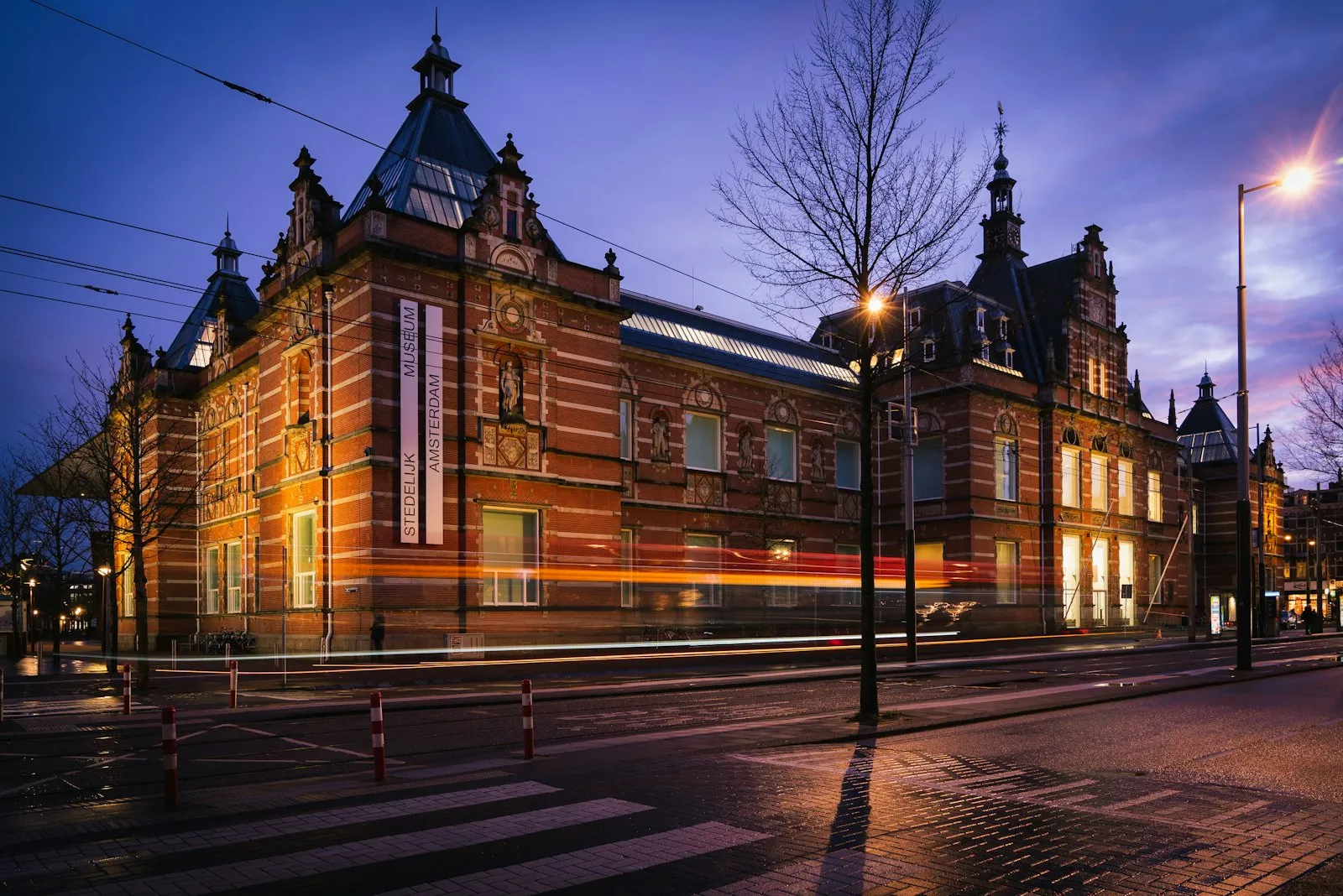
The present building on Paulus Potterstraat, in the Neo-Renaissance style, was designed by Adriaan Willem Weissman and opened in 1895. Its grand halls were meant to hold both art and design, and the building stands today as the museum's historic heart.
Development Through the 20th Century
In the early 20th century, the Stedelijk began to focus on new art, buying work by young artists and exhibiting new movements. It showed Dutch artists alongside international names, and it built a reputation for being open to innovation. Over the decades, the collection grew to include major works by Mondriaan and by Russian avant-garde artists.
Modern Art Leadership
After the Second World War, the Stedelijk entered a golden era under director Willem Sandberg, who led the museum from 1945 to 1962. A designer and typographer himself, Sandberg opened the museum to the public with energy, mixing art, design, film and photography, and bringing in artists from across the world. He also acquired groundbreaking works, and his posters and exhibition designs became famous in their own right. His successor, Edy de Wilde, continued the commitment to contemporary art, including bold purchases of American and European pieces.
This tradition made the Stedelijk a leading name in modern art, with a reputation for adventurous exhibitions and for showing new movements before others did. It remains a key institution in Dutch cultural life.
Expansion and Renovation
By the end of the 20th century, the museum needed more space, better facilities and a clearer public entrance. A major renovation and expansion began in the early 2000s, and the museum was closed for much of that period. It reopened in September 2012 with the historic building restored and a new wing alongside.
The Iconic Bathtub Extension
The new wing, designed by Benthem Crouwel Architects, was quickly nicknamed the Bathtub because of its smooth white form. Made from a composite material and designed to look as if it floats, it contrasts boldly with the old brick building. The extension holds the main entrance, a large foyer, a café and exhibition spaces. Its open, bright architecture has become a symbol of the museum and of modern Amsterdam.
Modern Art Explained
What Is Modern Art?
Modern art usually refers to art made from the late 19th century to about the 1970s. Artists broke away from traditional realism and began to experiment with colour, form and ideas. Movements such as Impressionism, Cubism, Abstraction and De Stijl changed what art could be. Instead of copying the world, artists started to interpret it.
What Is Contemporary Art?
Contemporary art is art made today, or roughly since the 1970s. It includes installations, video, photography, performance and digital work, as well as painting and sculpture. It often reflects current issues such as identity, technology, politics and the environment.
Why the Stedelijk Matters
The Stedelijk matters because it has been collecting and showing new art for more than a century. It gives you the whole story, from the early pioneers to the artists of today, in one place. It also helps you understand how art connects with design and everyday life.
Why Visitors Should Care
Modern art shapes the world around us, from the posters on the street to the furniture in our homes. Seeing the originals helps you see how ideas travel and how artists influence design, fashion and architecture. It can also be simply exciting to see something unexpected.
How to Enjoy Modern Art If You Are New to It
- Start with your reaction. You do not need to understand a work to feel something. Ask what you notice first.
- Read the label after looking. Spend a minute with the piece, and then check the explanation.
- Be curious, not critical. It is fine not to like everything. Look for what the artist is trying to do.
- Use the audio guide. It gives context in plain language.
- Choose a few works. Quality of attention matters more than covering every room.
- Take a break. The café and the foyer are good places to reset.
Top Highlights
Mondriaan
The Stedelijk holds one of the world's most important collections of Piet Mondriaan. His grids of black lines and blocks of primary colour look simple, but they are the result of years of experiment. The collection lets you follow his journey from realistic landscapes to pure abstraction.
The Malevich Collection
The museum has the largest collection of Kazimir Malevich outside Russia. The Russian artist is famous for Suprematism, an art of basic geometric shapes. His bold works helped open the door to abstract art. The display is a highlight for anyone interested in the avant-garde.
De Stijl
De Stijl was a Dutch movement of the early 20th century that used straight lines, right angles and primary colours in art, architecture and design. The Stedelijk shows paintings and furniture from the movement, including works associated with Theo van Doesburg and Gerrit Rietveld. It is a central part of Dutch cultural identity.
Contemporary Installations
Installations by modern artists often fill whole rooms, inviting you to walk through, look around and sometimes interact. They change regularly, so every visit can be different.
The Design Collection
From classic chairs to graphic design, the design galleries show how everyday objects are crafted. Look for iconic Dutch pieces, posters and product design, all displayed with context.
The Photography Collection
The museum also collects photography, from early experiments to contemporary work. Changing displays highlight different themes and photographers.
Temporary Exhibitions
The temporary exhibitions are a major reason to visit. They are often bold and international, and they change several times a year. Check the programme when planning, as a big show can shape your visit.
The works on view change as the museum rehangs its collection, so check the current displays if there is a specific piece you want to see.
What to Expect Inside
The Visitor Route
You enter through the Bathtub, with the foyer, shop and café, then move into the galleries. The layout is easy to follow, with the permanent collection and the temporary exhibitions in different areas. Signs and the museum map guide you from room to room.
The Permanent Collection
The permanent displays present modern art and design in a chronological or thematic way, with major works from Mondriaan, Malevich and others. Rooms are bright, spacious and welcoming.
Temporary Exhibitions
Large exhibition spaces host shows on single artists, movements or themes. They may require a separate section of the visit, so allow extra time.
Design Galleries
The design galleries are a favourite for visitors who like objects and craft. They are often more accessible than abstract art, and they show how design affects daily life.
How Much Time You Need
Allow 1.5 to 2.5 hours. A fast highlights visit can take about an hour, and a leisurely visit with a big exhibition can take half a day.
Visitor Information
- Address: Museumplein 3, 1071 DJ Amsterdam.
- Hours: Open daily, generally from 10:00 to 18:00, with later hours on some days. Check the current schedule.
- Ticket prices: Typically around €20 to €23 for adults, with reduced prices for young visitors. Prices may change.
- Accessibility: Lifts, step-free routes and accessible toilets. Wheelchairs are available. Contact the museum for specific needs.
- Photography: Generally allowed for personal use without flash, with some exceptions. Follow the signs.
- Lockers: Lockers and a cloakroom for coats and bags.
- Museum shop: A well-stocked shop with design objects, books and gifts.
- Café: A café with a terrace, good for coffee and lunch.
Best Time to Visit
- Morning: Calmest, with plenty of space in the galleries.
- Afternoon: Busier after lunch, but late in the day it quietens down again.
- Weekdays: Quieter and easier to book at short notice.
- Weekends: Busy, particularly for popular exhibitions. Book ahead.
- Summer: Peak tourist season. Choose a morning slot and enjoy the terrace.
- Winter: Quieter, with a cosy atmosphere, and a good time for a long visit.
How to Get to the Stedelijk Museum
- From Amsterdam Centraal: Take tram 2 or 12 toward the Museumplein area, about 15–20 minutes, and walk a few minutes.
- From Schiphol Airport: Take a train to Amsterdam Zuid and continue by tram or metro, or travel to Centraal and take a tram. Allow 30–45 minutes.
- By tram: Several lines stop near Museumplein, including 2, 5 and 12. Check a live planner for the current network.
- By metro: The North/South line stops at Vijzelgracht, about a 10–15 minute walk, and Zuid is a similar distance.
- By bike: Flat and easy, with bike parking nearby.
- On foot: About 5 minutes from the Van Gogh Museum and 10 minutes from Leidseplein.
Who Is the Stedelijk For?
Art Lovers
A must for anyone interested in modern art, with major names and strong exhibitions.
Design Fans
The design collection is one of the highlights, and Dutch design is shown at its best.
Architecture Lovers
The contrast between the historic building and the Bathtub is a real treat.
Couples
A relaxed and stimulating date, with a café terrace to end the visit.
Students
A rich source of ideas, with discounts that may apply. Bring your ID.
Weekend Visitors
A good companion to the Van Gogh Museum or the Rijksmuseum. Book a morning slot.
Local Insider Tips
- Check the exhibition programme before you book and choose the show that interests you.
- Book a morning slot to enjoy the galleries before they fill up.
- Take the audio guide if you are new to modern art.
- Do not try to see everything. Pick a few galleries and give them time.
- Start with the design galleries if abstract art feels intimidating.
- Use the lockers to travel light.
- Take a break on the café terrace on a sunny day.
- Look for the museum shop, which has excellent design gifts.
- Combine the visit with another Museumplein museum, but avoid trying all three in one morning.
- Walk outside the building to see the Bathtub from different angles.
- Bring a student ID if you are a student, as discounts may apply.
- Check the museum calendar for late openings and special events.
Best Photo Spots
Building Exterior
The contrast between the red-brick historic building and the white extension is a gift for photographers. Walk around the building and try different angles, especially in the late afternoon light.
Bathtub Architecture
Its smooth, curved form looks different from every side. Capture the reflection in the glass and the clean white lines against the sky. The entrance foyer is bright and photogenic.
Contemporary Installations
Check the photography rules, then use the scale and light of installations to create striking images. Include a visitor in the frame to show size.
Design Galleries
Furniture and objects look best in even light. Move close to details such as joints, curves and materials.
Museumplein Views
Step outside for wide views of Museumplein, with the museum, the lawn and the Rijksmuseum in the distance. It is a classic Amsterdam postcard scene.
Choosing the Right Ticket
- Standard entry: Timed admission to the collection and exhibitions. The right choice for most visitors.
- Combination tickets: Bundles with another Amsterdam attraction or a canal cruise can simplify planning. Compare the listings above.
- Museumkaart: An annual pass that gives free entry to many Dutch museums. It pays off if you visit several. Check the current price and reserve a slot.
- I amsterdam City Card: Includes entry to many attractions and public transport. Good value if you plan a busy short stay.
- Temporary exhibitions: Usually included in the standard ticket, though some events may need an extra ticket. Check the details.
Compare the options in the ticket section above before you pay. Each listing shows what is included.
Nearby Attractions
- Rijksmuseum: The national museum and The Night Watch, a short walk away.
- Van Gogh Museum: The world's largest Van Gogh collection, next door.
- Moco Museum: Modern and street art, right beside the Van Gogh Museum.
- Museumplein: The open lawn in front of the museums, ideal for a rest and a picnic.
- Vondelpark: Amsterdam's best-known park, about ten minutes away on foot.
- Heineken Experience: A lively attraction a short walk away in De Pijp.
- Canal cruises: A relaxing way to see the city after a museum.
For more ideas, browse our Amsterdam museums guide, the Anne Frank House, ARTIS Royal Zoo, our things to do in Amsterdam and the Amsterdam travel guide.
Suggested Itineraries
Half-Day
10:00 Stedelijk Museum, 12:00 lunch at the café, 13:00 stroll through Museumplein and Vondelpark.
Modern Art Day
10:00 Stedelijk Museum, 12:30 lunch, 14:00 Moco Museum, 16:00 a walk through De Pijp.
Museumplein Day
9:30 Rijksmuseum, 12:30 lunch on Museumplein, 14:00 Stedelijk Museum, 16:30 coffee on the lawn. Book each slot.
Weekend Visitor
Saturday: Stedelijk in the morning, canal cruise in the afternoon. Sunday: Van Gogh Museum and Vondelpark.
First-Time Visitor
Morning at the Stedelijk or the Rijksmuseum, afternoon in the old centre, evening canal walk. See our 3-day Amsterdam plan for more.
Top 5 Reasons Visitors Love the Stedelijk
- Modern art. Mondriaan, Malevich and many more in one place.
- The design collection. One of the best in the world, and very accessible.
- The architecture. A historic building with a bold white extension.
- Rotating exhibitions. There is always something new to see.
- The Museumplein location. It is easy to combine with other museums and green space.
Stedelijk Museum FAQ
Is the Stedelijk Museum worth visiting?
Yes, if you enjoy modern art, design or architecture, or want a contrast to the Golden Age collections nearby. It is a lively, well-curated museum with major names and surprising temporary exhibitions.
How long does the Stedelijk Museum take?
Plan 1.5 to 2.5 hours. A quick highlights visit takes about an hour, while design and art fans often stay longer, particularly if a temporary exhibition interests them.
What artists can I see at the Stedelijk Museum?
The collection includes Piet Mondriaan, Kazimir Malevich, Wassily Kandinsky, Marc Chagall, Gerrit Rietveld, Karel Appel, Andy Warhol, Marlene Dumas and many other modern and contemporary artists. What is on display changes from time to time.
Is the Stedelijk Museum good for beginners?
Yes. The museum is welcoming, the labels are clear, and the audio guide helps. You do not need any background in art to enjoy it. See the section on how to enjoy modern art for tips.
What is De Stijl?
De Stijl, meaning The Style, was a Dutch art and design movement founded in 1917. It used straight lines, right angles and primary colours, and it included artists such as Piet Mondriaan, Theo van Doesburg and Gerrit Rietveld.
What is the best time to visit the Stedelijk Museum?
Weekday mornings are usually the calmest. Late afternoons can also be quiet, and weekends and rainy days are the busiest.
Is photography allowed?
Photography is generally allowed in the permanent collection for personal use, without flash, although some works and exhibitions have restrictions. Follow the signs in each room.
Is the Stedelijk Museum accessible?
Yes. The museum has lifts, step-free routes and accessible toilets, and wheelchairs are available. Contact the museum in advance for specific assistance.
How much are Stedelijk Museum tickets?
Adult tickets are typically around €20 to €23, with reduced prices for young visitors and free entry for children. Prices vary, so check the current price when you book.
Is the Stedelijk Museum different from the Rijksmuseum?
Yes. The Rijksmuseum focuses on Dutch art and history up to the early 20th century, including Rembrandt and Vermeer. The Stedelijk focuses on modern and contemporary art and design from about 1850 to today.
Where is the Stedelijk Museum?
The museum is at Museumplein 3, 1071 DJ Amsterdam, on Museumplein beside the Van Gogh Museum, a short walk from the Rijksmuseum.
What is the Bathtub?
The Bathtub is the nickname for the museum's striking white extension, which opened in 2012 and looks like an upturned bathtub. It was designed by Benthem Crouwel Architects and houses the entrance, café and exhibition spaces.
Is there a design collection?
Yes. The Stedelijk has one of the world's major design collections, covering furniture, graphic design, product design and more, and it shows pieces by well-known Dutch designers.
Can children visit the Stedelijk Museum?
Yes. Children enter free or at reduced prices, and the museum offers activities for families. Some contemporary works can be abstract or challenging, so choose rooms that suit your child.
Is there a café and a shop?
Yes. There is a café with an attractive terrace and a museum shop selling design objects, books and gifts. Both are good for a break.
Are there lockers and a cloakroom?
Yes. Lockers and a cloakroom are available for coats and bags. Large bags may need to be left before you enter the galleries.
Can I use the Museumkaart or the I amsterdam City Card?
Both are valid for entry. You may still need to reserve a time slot, so check the current rules before you go.
Can I buy tickets at the door?
Often, but not for every day. Popular exhibitions and busy weekends can sell out, so booking online for a time slot is the safest option.
Can I visit on a cruise day or a short layover?
Yes. Book a timed ticket, allow about 1.5 hours and keep a buffer for returning to the port or airport. The museum is easy to reach by tram.
Is the Stedelijk good on a rainy day?
Yes. It is fully indoors, easy to enjoy in any weather, and close to other museums and cafés.
Which museums are near the Stedelijk?
The Van Gogh Museum, the Rijksmuseum and the Moco Museum are all within a few minutes' walk, as is the Concertgebouw. Together they make Museumplein the cultural heart of Amsterdam.
How often do exhibitions change?
The Stedelijk runs a changing programme of temporary exhibitions and rehangs parts of the collection regularly. Check what is on before you book.
Free Amsterdam Insider Guide
Get our free Amsterdam guide with museum tips, hidden spots and seasonal events straight to your inbox.
Free Weekly Newsletter
Stay in the Loop on Amsterdam
Weekly events updates, travel tips, festival announcements, seasonal guides and day trip inspiration — delivered straight to your inbox.
- ✓ Weekly events updates
- ✓ Amsterdam travel tips
- ✓ Festival announcements
- ✓ Seasonal guides
- ✓ Day trip inspiration
🔒 Spam-beschermd. Uitschrijven altijd mogelijk.
Final Verdict
The Stedelijk Museum is Amsterdam's best place for modern and contemporary art and design. It is welcoming for beginners, rewarding for experts and sits in an ideal spot next to the other great museums. We recommend booking a timed ticket and checking the exhibition programme before you go.
Who should visit: art lovers, design fans, architecture enthusiasts, couples, students and anyone who wants a contrast to the Golden Age collections.
Who may skip: visitors with only a few hours who would rather see the Rijksmuseum or the Van Gogh Museum, and anyone who does not enjoy abstract or conceptual art.
Overall rating: 8.6 / 10
Recommendation: a rewarding visit for most museum lovers, best booked ahead and paired with another Museumplein stop.